Sep 30, 2026Buying Guides
How to Choose the Right Makeup Brushes: A Perfect Guide for Buyers
Sourcing makeup brushes may appear to be about selecting products, but in reality, it is about selecting a supply chain.
How to Choose the Right Makeup Brushes: A Perfect Guide for Buyers
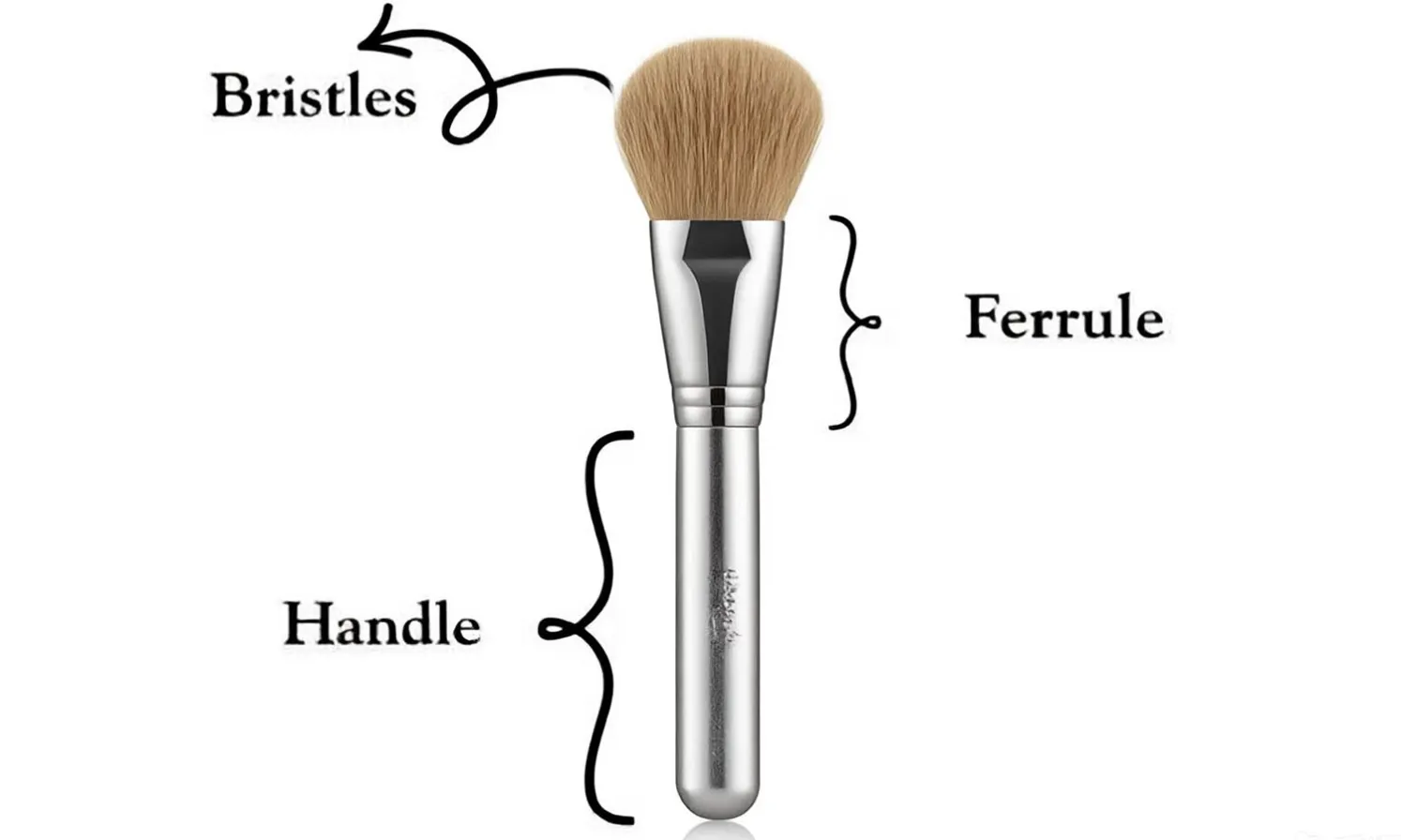
In the landscape of beauty retail and brand procurement, makeup brushes are evolving from mere accessories into a strategic product category that influences repeat purchase rates, average order values, and brand reputation. While seemingly simple—comprising bristles, ferrules, handles, and adhesive—their production actually involves a complex interplay of materials science, ergonomics, manufacturing processes, and supply chain management. For buyers, selecting makeup brushes is not simply a matter of picking out attractive items; it is a strategic business decision that requires balancing market demand, cost structures, quality consistency, and compliance risks. Consumer demand is becoming increasingly segmented: professional makeup artists prioritize powder pickup, blending capability, and durability; mass-market users seek softness, ease of use, and easy cleaning; those with sensitive skin look for hypoallergenic properties and synthetic (non-animal) bristles; and eco-conscious consumers favor vegan brushes and recyclable packaging. These varying market positions dictate specific combinations of bristle materials, brush shapes, and manufacturing techniques. Meanwhile, buyers face numerous pain points: samples that impress but mass-produced goods that shed bristles; attractive unit prices coupled with prohibitively high Minimum Order Quantities (MOQs); repeated delivery delays; pungent adhesive odors; loose ferrules; and product delisting due to non-compliant labeling. Truly professional procurement goes beyond merely looking at price quotes; it involves calculating the Total Cost of Ownership—factoring in return rates, customer complaint rates, inventory turnover, mold development fees, quality inspection costs, and supplier responsiveness, as well as the supplier's ability to support the brand's ongoing product evolution. Adopting a buyer's perspective, this article systematically breaks down the logic behind makeup brush selection—covering bristle materials, brush shapes and functions, and manufacturing details—to help you establish a practical and repeatable procurement framework.
1. Bristle Material
The bristles are the core component of a makeup brush, directly determining the product's tactile feel, application performance, and the end-user experience.
1.1 Natural Hair
Natural hair retains its complete cuticle structure; it is soft and highly absorbent regarding product pickup, allowing for even, seamless color application. It generally outperforms synthetic hair in terms of powder pickup and blending capabilities. However, animal hair is sensitive to water, difficult to clean, and requires higher maintenance. Additionally, supply is subject to factors such as climate and breeding cycles, leading to significant quality fluctuations between batches. Common types include goat hair, squirrel hair (including gray squirrel), weasel hair (often referred to as "mink" hair), and horse hair.
1.2 Synthetic Fibers
Synthetic fibers feature a smooth surface that repels both water and oil; powders slide off the bristles rather than becoming trapped within them, making them ideal for use with liquid foundations, concealers, lip glosses, and other wet-formula products. Synthetic bristles are water-resistant, durable, and easy to maintain. They are significantly more affordable than animal hair and offer superior batch-to-batch consistency, making them the preferred choice for mass procurement and private-label products. Key types of synthetic fibers include PBT (polybutylene terephthalate), nylon, and Taklon.
When selecting bristle materials, buyers should consider the following factors: (1) Product positioning and target audience: High-end professional lines may utilize natural materials like weasel hair or premium goat hair, whereas mass-market lines and younger demographics are better served by high-quality synthetic fibers (such as PBT), which offer superior cost-effectiveness and consistency. (2) Product application: Natural hair—or blends with a high natural hair content—is recommended for powder-based products (loose powder, blush, eyeshadow), while synthetic fibers are best suited for wet-formula products (liquid foundation, concealer, lip gloss).
2. Brush Shape and Functionality
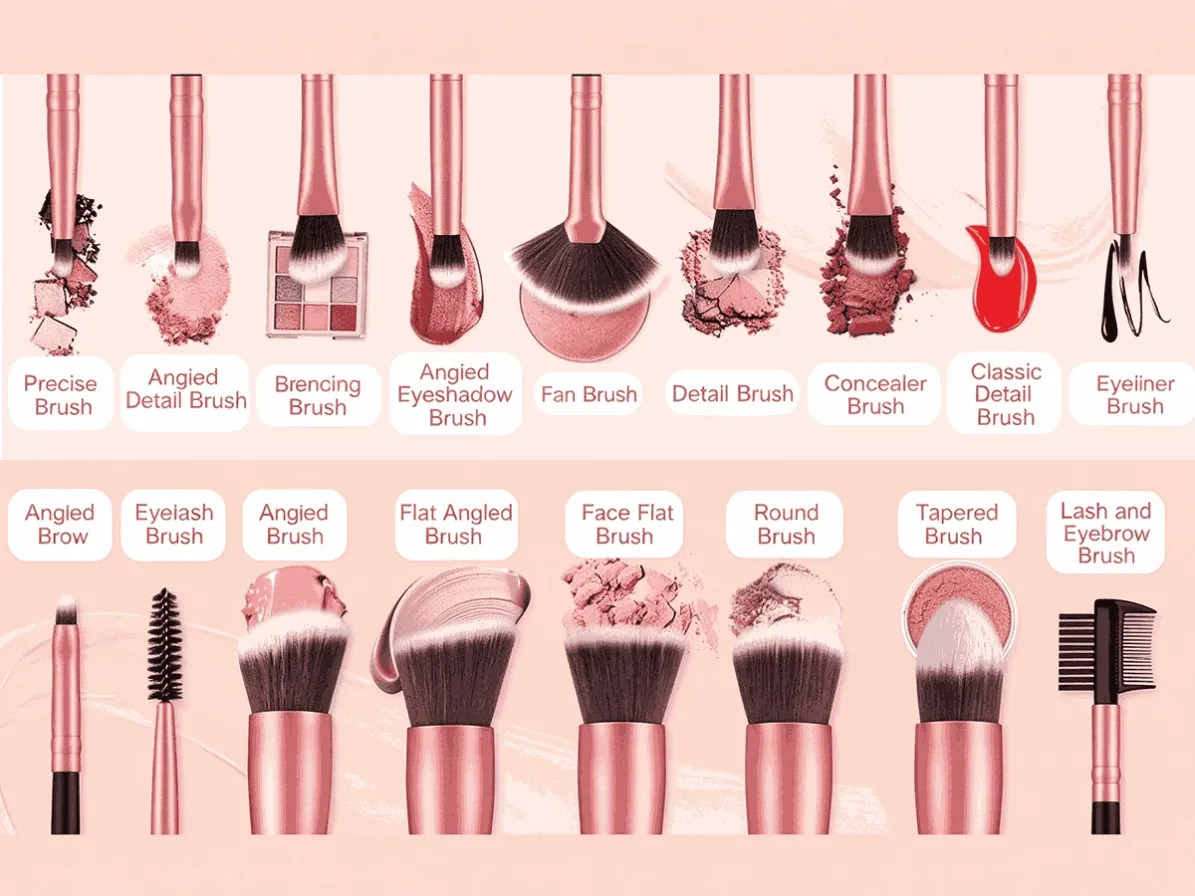
Brush shape is the second key dimension to consider when selecting makeup brushes. Once the bristle material is determined, the shape and size of the brush head directly dictate the product's functional positioning, the resulting makeup finish, and the end-user experience. Bristles of the same material can be suited for vastly different product categories—such as liquid foundation, loose powder, blush, or eyeshadow—depending on the brush shape. For buyers, a systematic understanding of brush shape classification and the corresponding functions is essential for building a balanced product line and avoiding SKU redundancy or coverage gaps.
2.1 Base Makeup Brushes
Base makeup brushes represent the largest and most diverse category of facial brushes, primarily divided into foundation brushes and loose powder brushes.
Foundation Brush: The shape directly determines the makeup finish and application technique. Common shapes include flat-top or round-top brushes and tongue-shaped (flat) brushes. A larger brush face allows for faster application, while a flatter brush face yields a thinner, more sheer finish. It is advisable to determine the mix of brush shapes based on the target customer's makeup habits (e.g., quick application for commuting vs. a preference for a refined, detailed finish).
Loose Powder Brush: These generally feature a tongue or bulb shape, a brush head diameter of approximately 5 cm, and fluffy bristles. The airy gaps between bristles ensure even powder pickup, allowing the entire face to be set with a light sweep. When sourcing, it is important to balance bristle fluffiness with brush head size; a head that is too small reduces setting efficiency, while one that is too large makes it difficult to control the amount of powder applied.
2.2 Eyeshadow Brushes
Eyeshadow brushes constitute the category with the greatest variety of shapes and the highest level of specialization. Market data indicates that eye brushes account for 31% of consumer preferences—the highest share among all brush types—significantly surpassing facial brushes at 23%. Based on function, they can be categorized into the following core shapes:
All-over Color Brush (Base Brush): Typically a medium-sized brush with a flat, rounded, or tongue-shaped tip, used to apply a base color across the entire eye socket. Blending brush: Features a fluffy, long-bristled design with a rounded or tapered (flame-like) tip; used to soften the edges of eyeshadow and create natural transitions.
Detail brush: A small brush with dense bristles or a fine, flat, pointed tip; used for precision tasks such as deepening the outer corner of the eye, applying color to the lower eyelid, and highlighting the inner corner.
Angled liner brush (or "blade" brush): Features an extremely fine, elongated tip resembling a blade edge (approx. 0.2 cm in diameter); used with gel eyeliner to create smooth, fluid lines, or for intricate techniques like defining the lower lash line.
2.3. Contouring brushes
Contouring brushes are categorized by function into contour brushes, highlighter brushes, and blush brushes; their designs are optimized to fit the contours of the face.
Shading/Contour brush: The most common type is the angled contour brush; the angled shape fits the cheekbones and facial contours effectively, creating defined lines and allowing for the blending of shading over larger areas. Nose contouring brushes require smaller heads; common shapes include angled, tapered (flame-like), and round. Curved tips fit the curves along the sides of the nose well, while round and tapered shapes are more widely used for nose contouring.
Highlighter brush: Primarily comes in fan and tapered (flame-like) shapes. Fan brushes have a flat profile that can be easily rotated, making them suitable for highlighting large areas like the cheekbones and forehead. Tapered brushes have smaller tips, making them ideal for precise application on detailed areas such as the bridge of the nose, the philtrum, and the Cupid's bow.
Blush brush: Usually features a round or angled tip. Round brushes are ideal for creating a cute, rounded blush look, while angled brushes follow the cheekbone contours more closely, making them suitable for a sculpted blush effect.
2.4 Other functional brushes
Concealer brush: The choice of brush shape depends on the type of blemish being covered. A flat, tongue-shaped concealer brush is ideal for the precise coverage of raised blemishes, such as pimples and acne marks; a round-tipped concealer brush, featuring denser and more resilient bristles, is suited for dabbing coverage onto small areas of imperfection or dark circles.
An eyebrow brush typically features a small, angled head designed for defining brow lines.
A lip brush usually has a small, pointed or square tip with firm, resilient bristles, allowing for the precise outlining of the Cupid's bow and lip contours.
A fan brush is used to sweep away excess powder from the face; it features fine, dense bristles and a wide brush head.
3. Craftsmanship Details of Makeup Brushes
Once the bristle material and brush shape are determined, craftsmanship details constitute the third core dimension—influencing product quality consistency, cost structure, and compliance risks.
3.1 Brush Head Shaping Process
Brush head shaping is the process of transforming prepared bristles into a brush head with a specific form; key steps include weighing, cup-setting (or "bunching"), wire wrapping, trimming, and final shaping.
Weighing: This is the foundation for controlling bristle density. There are strict standards for the amount of bristles per brush; an excess results in a brush head that is too dense and difficult to blend, while an insufficient amount leads to poor powder pickup and powder fallout.
Cup-setting (Bunching): This involves placing combed, aligned bristles into a specific mold to form the initial shape. The technical challenge here lies in the difficulty of precisely handling the small volume of bristles; operators must place the bristles into the mold and repeatedly tap it against a flat surface, utilizing gravity and vibration to allow the bristles to naturally settle into the intended shape. The quality of this step directly affects the brush head's uniformity and layering; improper setting can result in uneven density (dense on one side, sparse on the other) or irregular bristle tips.
Trimming: This is the critical step for defining the final shape of the brush head. Operators use a combination of manual techniques and machinery to trim the shaped bristle bundle, removing excess tips to ensure a distinct profile and a smooth surface. For specialized shapes—such as "blade" brushes or angled contour brushes—trimming precision requirements are higher, with tolerances for angles and thickness typically controlled within ±1–2 mm.
3.2 Brush Handle and Ferrule Craftsmanship
The ferrule is the crucial component connecting the bristles to the handle; the most common materials are aluminum and copper. Aluminum ferrules are inexpensive, easy to stamp into shape, and rust-resistant, making them the choice for approximately 90% of makeup brushes. Copper ferrules are thicker, offer a richer finish, and are resistant to deformation and corrosion, though they come at a significantly higher cost. The aluminum tube forming process involves stamping purchased aluminum pellets into a tubular shape; large tubes require a secondary deformation stamping step, followed by the removal of excess material using a tube cutter. The formed tubes undergo a grooving process to create a circumferential indentation, which ensures proper positioning and secure locking during the subsequent brush head assembly. After grooving, the tubes are polished and sent to an external contractor for surface treatment (such as anodizing or sandblasting); they must pass quality inspection before proceeding to the assembly stage. Buyers should note that the wall thickness of the aluminum tube directly affects the deformation resistance of the tube opening.
Brush handles are available in a wide range of materials, including wood (such as birch and southern elm), bamboo, acrylic, plastic, metal, and resin. Wooden handles undergo multiple processing steps, including cutting, sanding, polishing, coloring, and drying; the application of eco-friendly exterior coatings enhances durability and fade resistance. When purchasing wooden handles, attention should be paid to moisture content control and paint adhesion—handles with excessive moisture content are prone to cracking in dry environments, while poor paint adhesion can lead to peeling during use.
Sourcing makeup brushes may appear to be about selecting products, but in reality, it is about selecting a supply chain. Bristle material determines tactile feel and application performance; brush shapes dictate functionality and SKU structure; and manufacturing processes—such as shaping, handle construction, and ferrule assembly—determine batch consistency and durability. Only by comprehensively evaluating materials, shapes, and craftsmanship can you select a partner that truly aligns with your brand positioning and market pace. Choosing the right brush starts with choosing the right supplier. Zeming is an excellent choice.