Oct 6, 2026Buying Guides
Why Are Makeup Brushes So Expensive? A Perfect Guide for Buyers
This article explains to buyers why makeup brushes are so expensive, focusing on three aspects: raw materials, manufacturing processes, and R&D investment.
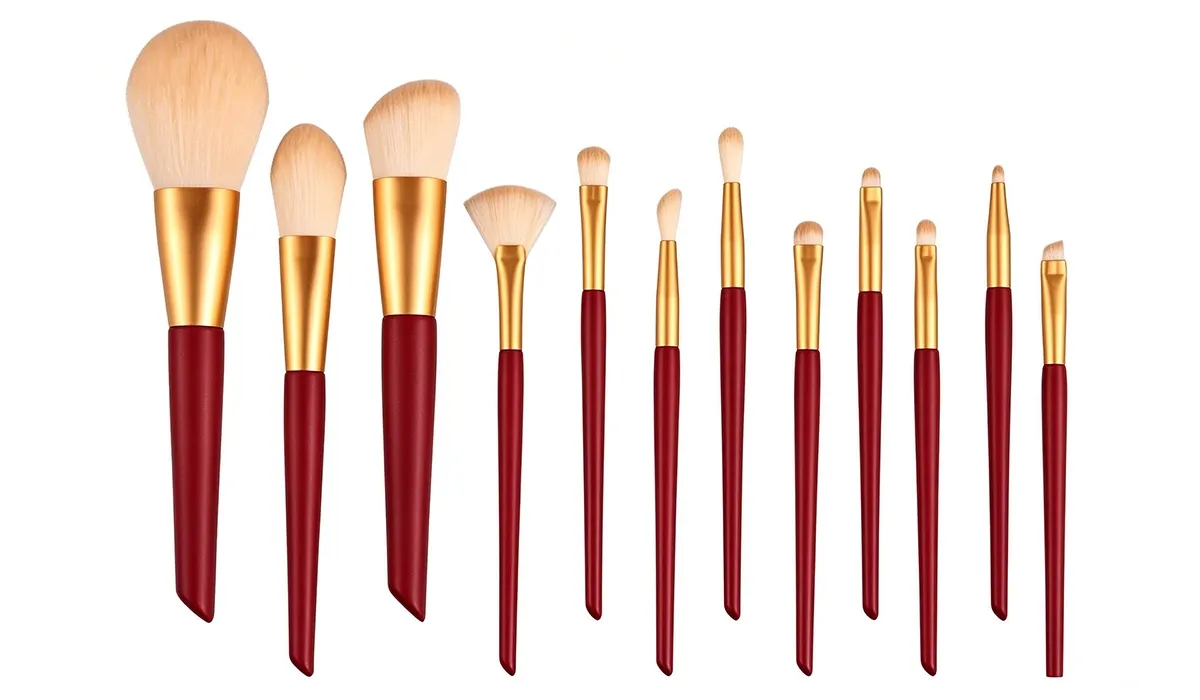
When a supplier quotes an ex-factory price of $15 for a single makeup brush, your initial reaction might be: "Isn't it just a tuft of bristles and a handle?" However, if you were to take apart a high-end brush, you would discover that the costs go far beyond the visible bristles and handle. From premium animal hair—costing tens of thousands of dollars per kilogram and requiring manual sorting and degreasing—to the handle, which undergoes multiple stages of sanding, lacquering, and drying, and finally the brush head shape, which must be meticulously fine-tuned by experienced artisans—every brush conceals hidden costs that aren't immediately apparent. As a buyer, if you focus solely on driving down material costs, you risk overlooking the very factors that determine quality and profitability.Now, let’s break down the true cost structure behind this "little brush."
1.Raw materials for makeup brushes
When you break down the price quote for a makeup brush and discover that the "bristles" account for over 60% of the total cost, it isn't a case of a supplier inflating prices—it reflects the industry's actual cost structure.
1.1 The price differences between bristle grades are far greater than most buyers imagine.
Basic synthetic fibers (nylon, PBT polyester) cost only $3–$10 per kilogram. In contrast, the bristle material alone for a single loose powder brush made from a blend of gray squirrel and goat hair costs $45–$75, while an eyeshadow brush made from yellow weasel tail hair costs $12–$18 per unit. Yellow weasel hair is four to five times the price of gray squirrel hair; the average market price for premium yellow weasel tail hair rose from $425/kg in 2020 to $575/kg in 2024. Goat hair is also graded into tiers—such as *Xi Guang Feng*, *Zhong Guang Feng*, *Bai Jian Feng*, and *Huang Jian Feng*—with quality decreasing at each level. High-quality goat hair feels cool and silky against the skin, whereas low-grade goat hair feels like one thing: prickly. A quote might simply list "goat hair brush," but the specific type of goat hair used can cause costs to vary several-fold.
1.2 Fluctuations in the natural bristle supply chain directly impact your purchase price.
Take gray squirrel hair, for example: raw material prices have skyrocketed in recent years as the material becomes increasingly scarce. Takeda Brush, a leading brush manufacturer in Kumano, Japan, announced that the price of gray squirrel hair has risen to levels incomparable to those of a few years ago (more than fivefold), forcing them to implement phased price hikes. Leading Chinese makeup brush manufacturers also admit that the price of pure goat hair rises year by year; coupled with issues like uneven color and high wastage rates, maintaining consistent quality for high-end models is a significant challenge. Meanwhile, nylon filament is derived from petroleum; in 2023, global prices for nylon filament surged by 18% due to OPEC+ production cuts and refinery bottlenecks, while natural materials like goat hair faced supply shortages caused by climate issues and stricter animal welfare regulations. By 2026, the cost of base raw materials had risen by another 10%–15% year-on-year. Ultimately, these fluctuations are reflected in the price quotes you receive from suppliers.
1.3 Raw material costs go beyond the mere purchase price of the hair itself; they also encompass hidden expenses related to sorting and material loss.
Natural animal hair is not a standardized industrial material. Upon arrival at the factory, it undergoes multiple processing steps—such as manual sorting, degreasing, and combing—during which raw material with uneven color or inconsistent length is discarded. Factories typically build a 3%–5% buffer into their quotes to account for the defect rate; however, if a buyer demands "zero-defect" quality control, the loss rate can climb above 8%, naturally driving up costs. This means that for the same batch of raw material, the actual cost of usage can vary by nearly 100% depending on the quality control standards applied.
2.Makeup Brush Manufacturing Process
There is a consensus in the industry: the quality of a makeup brush depends roughly 30% on materials and 70% on the factory's craftsmanship. Manufacturing a single brush typically involves over 30 steps—ranging from precise bristle weighing and shaping in a forming cup to trimming, gluing for stability, and handle assembly—with the precision required at each stage adding to the overall cost.
2.1 The irreplaceable nature of manual processes is the primary driver of cost differences.
Take the critical "forming cup" process, for instance—this is the step where a loose bundle of bristles is shaped into a brush head with a perfect, curved surface. Based on our 20-plus years of manufacturing experience, mastering this technique takes years of practice; for example, if the rhythm of rotating the forming cup is slightly off, the layering of the bristles can become disorganized. The weighing stage is equally demanding, requiring each bundle to be measured down to the milligram to ensure precise bristle volume and prevent compromised makeup application. These processes cannot be automated; they rely on skilled artisans who hone their tactile intuition over years of work. Consequently, labor costs represent a significant portion of the price quote; manual craftsmanship entails variable quality, high wages, and slower production speeds—factors that are directly reflected in your procurement price.
2.2 The fundamental purpose of "manual adjustment" is not merely to make the brush look better, but to ensure consistent performance.
Many buyers wonder why factories perform repeated manual adjustments after the brush head has been shaped. This is not done simply to make the brush look more refined in sample photos; rather, it addresses the fact that the brush head's shape inevitably undergoes subtle changes during steps such as demolding, untying, insertion into the ferrule, assembly, and final inspection. The true goal of manual adjustment is to restore the brush head to a controlled range of functional precision—regulating the top curvature, edge transitions, body thickness, density distribution, bristle alignment, and pressure transmission. Simply put, without proper manual adjustment, the brush's application performance will fail to match the approved sample. In mass production, this adjustment is an iterative correction process spanning multiple stages; since each stage requires human intervention, costs naturally accumulate at every step.
2.3 It is the invisible quality control steps that truly drive the difference in costs.
Take synthetic bristles, for example: each fiber is thicker and stiffer at the base, yet finer and softer at the tip. If a fiber is oriented incorrectly during processing—with the base facing outward—even a few such reversed fibers in a brush head can cause a noticeable "prickly" sensation on sensitive skin. High-standard production incorporates a step to inspect fibers individually, with workers manually identifying and removing any that are facing the wrong way. This process is slow, requires a trained eye, and leaves no visible trace on the finished product—a brush head that has undergone this inspection looks identical to one that hasn't, yet the labor costs differ significantly. Factory quotes typically factor in a 3%–5% buffer for defect rates, but demanding "zero-defect" quality control can push the waste rate above 8%.
3.R&D investment in makeup brushes
A key industry figure warrants attention: international high-end brands invest as much as 8.2% of their revenue into R&D for proprietary materials, launching 3–5 new brush models annually that feature technologies such as antimicrobial fibers and nano-coatings. Meanwhile, 2024 industry data shows that the top five (CR5) companies spend an average of 5.8% of their revenue on R&D—3.2 percentage points above the industry average. By comparison, a leading Chinese makeup brush manufacturer with annual revenue exceeding 100 million RMB spent 1.15 million USD on R&D in 2023, a 2.9% increase year-over-year. For buyers, this means the portion of the price representing the R&D premium is precisely what creates the core barrier enabling suppliers to differentiate their products.
3.1 Material R&D represents the most costly and time-consuming stage of the research and development process.
The performance of a makeup brush depends 70% on its bristles. However, natural animal hair faces challenges such as limited resources, inconsistent quality, and rising costs. To address this, leading companies are investing heavily in R&D to develop biomimetic alternative materials. Top Chinese makeup brush manufacturers are leveraging industry-academia-research platforms to collaborate closely with textile institutions, driving a comprehensive innovation chain that spans fiber development and modification through to final brush formation. Take, for example, the development of polyester filaments designed to mimic animal hair: this process requires precise control over the particle size and ratio of flake-like additives within the polyester matrix—specifically, flake talc (2–4 μm), flake kaolin (4 μm), and acicular wollastonite (with an aspect ratio of 15:1). Through multiple processes—including extrusion, drawing, surface treatment, and high-temperature heat setting—micro-textures resembling animal hair scales are formed on the bristle surface, achieving natural color application and excellent powder pickup and release. Another patented antimicrobial bristle technology involves adding silver-containing soluble glass to a PTT and PBT resin matrix at a precise ratio of 0.8–0.1% by weight; subsequent alkali treatment creates surface irregularities measuring 1–2 μm. Behind the development of these formulations lie years of experimentation, testing, and iteration by teams of materials engineers; each successful formula represents hundreds of thousands—or even over a million—dollars in sunk R&D costs.
3.2 R&D investment occurs not only in the laboratory but also during the process of creating custom samples for clients.
Leading makeup brush manufacturers employ a dual-layer R&D structure comprising "foundational R&D" and "custom development": the foundational R&D team focuses on common industry technical challenges and underlying material innovation, while product development groups are dynamically assembled based on client needs, working in deep integration with business teams to co-develop products. This means that when a buyer submits a customization request, the supplier incurs costs extending far beyond production-line materials; they also invest in R&D team labor, sample fabrication, and the iterative costs associated with multiple rounds of revisions. Industry data indicates that sample development costs for a single custom makeup brush range from $100 to $500, with logo design costing between $50 and $300; initial prototyping typically takes 5–7 days, with each round of revisions requiring another 3–5 days. For uniquely shaped handles or specialized brush heads requiring new molds, developing a single mold can take weeks and cost thousands of dollars—an investment that must be amortized across subsequent production volumes to be recouped. When comparing quotes, many buyers focus solely on the unit price of the finished product, overlooking the R&D labor hours the supplier has already invested during the "invisible stages" of the process.
The price of a makeup brush is never merely the sum of its bristles and handle. Raw materials set the baseline, craftsmanship determines quality, and R&D investment shapes the future. As a buyer, understanding these three factors means that when you negotiate price, you are actually challenging the supplier's technical barriers and quality standards. To source high-quality makeup brushes, please contact Zeming.